
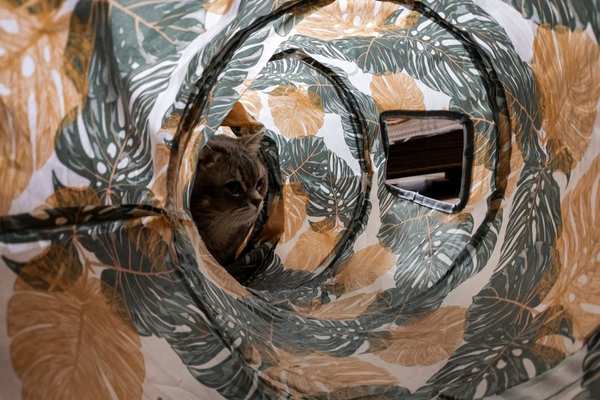
Indoor cats can live rich, satisfying lives, but four walls remove many challenges that naturally fill a cat’s day. Outdoors, a cat may climb, stalk, investigate scents, scratch, hide, and work for food. Indoors, those opportunities need to be created deliberately. The best indoor cat enrichment ideas are about giving your cat safe ways to make choices and express normal feline behaviour.
Think in terms of hunting, climbing, scratching, exploring, feeding, resting, and observing. Rotate activities rather than presenting everything at once, and notice what your cat enjoys. A bold young cat may love fast chase games, while a senior may prefer gentle food puzzles, low platforms, and a sunny lookout.
Make Play Feel More Like Hunting
Use short, interactive chase sessions
Wand-style toys are useful for indoor cat play because you control the movement. Instead of waving the toy constantly in front of your cat, make it behave like prey: let it dart behind a chair leg, pause under a rug edge, then move again. Give your cat chances to stalk, pounce, catch, and hold the toy. Short sessions can be more engaging than one long workout.
Put string, ribbon, feathers, and wand toys away after supervised play if they could be chewed, swallowed, or tangled. Check toys regularly for loose parts and damage.
Rotate toys instead of leaving them all out
A toy that sits on the floor for weeks can become part of the furniture. Keep a small selection available and swap items every few days. A soft mouse, kicker toy, crinkle toy, cardboard ball, or paper bag with the handles removed can feel interesting again after a break. This simple rotation is one of the easiest cat enrichment activities for reducing indoor cat boredom.
Turn Food Into a Daily Enrichment Opportunity
Introduce puzzle feeding gradually
Puzzle feeders add movement and problem-solving to mealtimes. Start easy so your cat learns that interacting with the object produces food. For example, place part of the normal daily dry-food allowance in an open egg box or shallow puzzle tray. Once your cat is confidently pawing food out, increase the challenge gradually.
Food used for enrichment should usually come from the cat’s normal daily ration rather than becoming extra calories. Cats with medical conditions or prescribed diets should follow their vet’s feeding advice.
Create a simple indoor hunt
If your cat enjoys searching, divide a small portion of food into several tiny stations around one safe room. Put a few pieces beside a scratching post, on a stable low shelf, near a cardboard box, and in an easy puzzle feeder. This turns breakfast into a sequence of discoveries and adds gentle cat mental stimulation.
A cat in a small flat does not need a dedicated playroom. A five-minute wand game before breakfast, followed by three food-search points and access to a secure window perch, provides several forms of enrichment in one compact space.
Use Vertical Space to Make the Home Feel Larger
A sturdy cat tree, secure shelf, window perch, or suitable piece of furniture can give a cat a higher place to observe the home. Make sure elevated surfaces are stable, easy to reach, and away from hazards such as hot appliances or unsecured windows. In multi-cat homes, extra vertical options can create more routes and resting places.
Give Scratching a Purposeful Place
Scratching is normal feline behaviour. It allows cats to stretch, maintain their claws, and leave visual and scent marks. A tall, stable post suits cats that like a full-body stretch, while others prefer horizontal cardboard scratchers. Place scratchers near a sleeping spot, beside a favourite route, or close to furniture already being scratched.
If your cat ignores a new post, try changing its location. Placement can matter as much as the material.
Add Safe Sights, Scents, and Things to Investigate
Create a window-watching station
A secure perch near a closed or safely screened window can provide changing visual interest from birds, people, leaves, and weather. Some cats enjoy watching outside activity for long periods, while nervous cats may prefer a quieter observation point.
Use scent enrichment carefully
Novel scents can make familiar spaces more interesting. Catnip can be enjoyable for responsive cats, although not every cat reacts to it. You can also rotate clean cardboard boxes or safe household objects carrying unfamiliar but mild smells. Avoid essential oils and strongly fragranced products around cats because some substances can be irritating or harmful.
Make Hiding and Rest Part of Enrichment
Enrichment is not constant entertainment. Cats also need places where nothing is expected of them. Offer quiet hiding spots such as a cardboard box, covered bed, or accessible shelf. A cat that can retreat when visitors arrive, appliances are noisy, or another pet is active has more control over its environment.
For older cats or those with reduced mobility, make favourite resting places easier to reach with lower platforms or pet steps.
Build a Simple Enrichment Rhythm
Variety works best when it is manageable. You might use interactive play on most days, a puzzle feeder at selected meals, a fresh cardboard box midweek, and a toy rotation at the weekend. Watch your cat’s response and repeat what produces relaxed curiosity, play, or focused exploration. If an activity causes fear or frustration, simplify it or replace it.
A sudden behaviour change should not automatically be blamed on boredom. Reduced play, unusual hiding, overgrooming, aggression, appetite changes, or litter-tray changes can also be linked to stress or health problems. If something is new or persistent, speak to a vet.
Frequently Asked Questions
How much enrichment does an indoor cat need each day?
There is no single correct number of minutes. Several brief opportunities spread through the day often work well. Interactive play, food searching, climbing, scratching, and quiet observation all count. Your cat’s age, health, personality, and energy level should guide the routine.
Can indoor cats get bored even if they have lots of toys?
Yes. Quantity matters less than novelty, interaction, and opportunities to perform natural behaviours. Rotating toys, changing how food is offered, and adding safe climbing or hiding options can be more stimulating than leaving many unchanged toys on the floor.
Are puzzle feeders suitable for every cat?
Most cats can try a simple puzzle, but difficulty should match the individual. Start with an easy design and show the cat how food can be obtained. Cats with dental, mobility, dietary, or medical needs may require an adapted approach recommended by a vet.
What is the cheapest way to enrich an indoor cat?
Cardboard boxes, paper balls, food hidden in safe locations, supervised wand play, and rearranged resting spots can all add variety at very little cost. The goal is not expensive equipment; it is creating safe opportunities for your cat to explore, choose, play, and rest.
Keep Enrichment Flexible
The most effective indoor cat enrichment ideas fit the cat in front of you. Provide safe choices, rotate activities, and let your cat decide what deserves attention. A home with places to climb, scratch, hunt, hide, watch, and relax can support physical activity and mental wellbeing. Small changes made consistently are usually more valuable than an elaborate setup your cat never uses.