
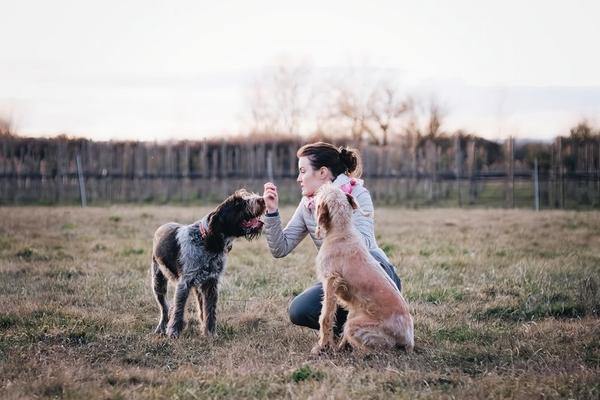
Force-free dog training offers reliable behaviour without fear, pain or intimidation. Rather than trying to “show the dog who is boss”, it teaches useful choices by rewarding the right behaviour and preventing unwanted habits. This welfare-led approach can be adjusted to a dog’s confidence, health, history and motivation.
In the UK, leading welfare organisations and professional behaviour bodies recommend reward-based methods. Dogs repeat behaviours that produce good outcomes, so training becomes a clear conversation instead of a guessing game.
What Force-Free Dog Training Really Means
Force-free dog training methods avoid techniques designed to cause pain, fear or distress. That rules out shouting, hitting, lead jerks, alpha rolls, choke chains, prong collars and electric shocks. It also means avoiding subtler intimidation, such as looming over a worried dog or forcing them to remain close to something they fear.
It does not mean allowing a dog to do anything they like. Good force-free training includes boundaries, supervision and sensible management. The handler teaches an alternative behaviour and changes the environment, rather than punishing the dog after a mistake.
For example, a dog that steals shoes can be given suitable chews while shoes are kept out of reach. The owner rewards the dog for choosing its own toy. Management stops repeated mistakes; training builds the better habit.
The Core Methods Beginners Can Use
Positive Reinforcement
Positive reinforcement dog training adds something the dog values immediately after a desired behaviour. The reward might be food, play, praise, permission to sniff or the chance to greet someone. A reward is defined by the dog, not the owner. One dog may work for chicken, while another prefers a tug toy.
Reward within a second or two so the dog can connect the outcome with the behaviour. When teaching a new skill, reward every successful attempt. Once it is fluent in several places, food can become less frequent while praise, play and real-life rewards continue.
Marker and Clicker Training
A marker tells the dog the exact moment they got something right. You can use a short word such as “yes” or a clicker. Clicker training dogs is useful when the correct action happens quickly, such as four paws touching the floor.
Teach the marker by clicking or saying “yes”, then giving a treat. Repeat several times. After that, mark the desired behaviour and follow with the reward. The marker is a promise that a reward is coming, not merely a sound for attracting attention.
Luring, Capturing and Shaping
Luring uses a treat to guide the dog into position, such as moving food above the nose to encourage a sit. Fade the lure early so the dog does not need to see food first. Capturing rewards a behaviour the dog offers naturally, such as settling on a mat. Shaping rewards small steps towards a finished skill.
Desensitisation and Counterconditioning
These techniques are often used for fear and reactivity. Desensitisation introduces a trigger at an intensity the dog can handle. Counterconditioning pairs that trigger with something pleasant. A dog worried by visitors might hear the doorbell at low volume and receive food before showing distress. The sound becomes louder only while the dog remains relaxed.
A Practical Example: Calm Greetings at the Door
Imagine your dog jumps at every visitor. Pushing them down or repeatedly saying “no” may still provide attention, and it does not explain what to do instead. Reward based training gives the dog a clear job.
Place a mat a few steps from the door. Toss a treat onto it, mark when your dog steps onto the mat and reward again while they remain there. After several short sessions, add a cue such as “mat”. Next, touch the door handle, reward the dog for staying and reset if they get up. Progress to opening the door slightly, then asking a family member to knock softly.
Keep each stage easy enough for success. When a visitor enters, they should ignore the dog until all four paws are down. Calm access to the person can become part of the reward. This is gentle dog training with structure: excitement is managed and calm choices make greetings happen.
How to Set Your Dog Up to Learn
Short sessions usually work better than long drills. Aim for two to five minutes and practise in a quiet room before adding distance, duration or distractions. Change only one difficulty at a time.
Watch body language. Turning away, lip licking, crouching, freezing, refusing food or trying to leave can indicate stress. Lower the difficulty, increase distance from the trigger or pause. A personalised plan should respect what the dog can cope with that day.
Use small rewards within the dog’s daily food allowance and save higher-value food for difficult environments. Family members should use the same cues, because mixed messages slow learning.
Common Misunderstandings
One myth is that food is bribery. A bribe is shown before the behaviour, whereas planned reinforcement follows the behaviour and strengthens learning. Rewards can later become less predictable, but they should not disappear completely.
Force-free trainers do not simply ignore unwanted behaviour. They prevent rehearsal, identify why it happens and teach a safer alternative. Barking at the window may require blocked visual access, more enrichment and reinforcement for moving away.
Gentle methods are not necessarily slow. Clear timing, suitable rewards and realistic steps often speed learning because the dog feels safe enough to experiment. Punishment may suppress behaviour briefly without addressing fear, frustration, pain or unmet needs.
When to Ask for Professional Help
Speak to your vet when behaviour changes suddenly, because pain or illness can affect training. Seek qualified help for aggression, severe fear, repeated bites, separation-related distress or behaviour that puts people or animals at risk. In the UK, look for a practitioner assessed through a recognised professional body and ask whether they use reward-based, non-punitive methods.
Natural internal linking opportunities include puppy recall training, understanding dog body language and enrichment ideas for anxious dogs.
Frequently Asked Questions
Can force-free training work with a stubborn dog?
Dogs labelled stubborn are often confused, distracted, worried or insufficiently motivated. Make the task easier, improve the reward and check that the dog has learned the cue in that environment. Rule out medical discomfort when behaviour changes.
Do I have to use treats forever?
No. Use frequent food rewards while teaching, then mix them with praise, play and everyday rewards. Continue rewarding excellent responses occasionally so the behaviour remains worthwhile.
Is clicker training necessary?
No. A clicker is a precise marker, but a consistent word can work well. Choose the option you can deliver clearly and reliably.
What should I do when my dog gets it wrong?
Avoid punishment. Reset the situation, reduce the difficulty and give the dog another chance. Mistakes often mean the current step is unclear or too challenging.
Building Better Behaviour Without Fear
Force-free training replaces confrontation with communication. By rewarding useful choices, managing the environment and progressing at the dog’s pace, owners can teach practical skills while protecting trust. Start with one small behaviour, practise in easy situations and let success build gradually. The result is a dog that understands what to do and feels safe learning with you.