
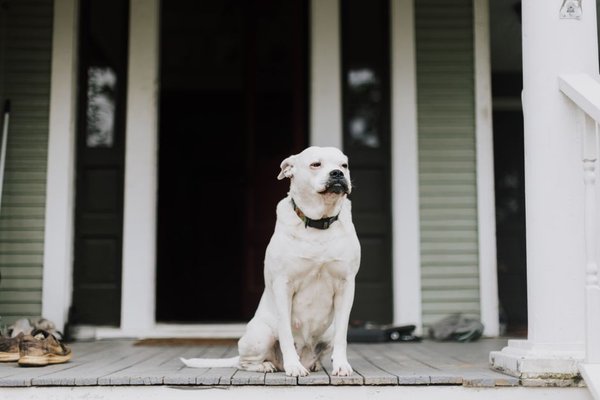
As hybrid working patterns settle into a new routine, many dogs that became used to having people at home are suddenly facing longer periods alone. For some, that change brings mild restlessness. For others, it triggers genuine panic: barking, pacing, drooling, toileting indoors, scratching doors or destroying furniture soon after the household leaves.
Separation anxiety is not stubbornness or revenge. A dog destructive when alone is often trying to escape, self-soothe or cope with distress. Effective training therefore focuses on changing how the dog feels about separation, not simply stopping the visible behaviour. The process can be slow, but gradual, well-managed practice is far more likely to work than repeatedly leaving a frightened dog to “get used to it.”
First, Make Sure It Is Separation Anxiety
Not every chewed cushion or complaint from a neighbour means separation anxiety. Dogs may bark because they hear people outside, destroy items through boredom, or toilet indoors because they were left too long. Separation-related distress usually appears shortly before departure or within the first part of an absence, and it may include repeated pacing, whining, panting, escape attempts, excessive salivation or refusal to eat.
A home camera is useful for understanding dog left alone anxiety. Record short departures and note when the behaviour begins, what triggers it and whether the dog settles. Share the footage with your vet, particularly if the problem appeared suddenly. Pain, age-related changes and other medical issues can affect coping, so rule them out before training.
Stop Rehearsing Full-Blown Panic
Training cannot progress if the dog is regularly pushed beyond its coping limit. During the early stages, try to prevent unavoidable long absences by using a trusted family member, dog sitter, walker or suitable daycare. This is management, not failure. It gives the nervous system time to learn a calmer pattern instead of practising panic every weekday.
Start by identifying the longest separation your dog can currently tolerate without showing stress. For one dog, that may be two minutes. For another, it may be only the time it takes to touch the front-door handle. Training should begin below that threshold.
Use Gradual Desensitisation
Gradual desensitisation means exposing the dog to a tiny, manageable version of being alone, then increasing the difficulty only while the dog remains relaxed. Begin with everyday distance inside the home. Walk to another room for a second, return calmly, and repeat at varied intervals. Once that feels ordinary, briefly step behind an internal door, then progress to the front door.
Keep sessions short. A starting session might look like this: pick up your keys, put them down, walk to the door, open it, close it and return to your chair. Later, step outside for one second. Then try three seconds, one second, five seconds and two seconds. Mixing easier repetitions among harder ones prevents a relentless countdown toward discomfort.
Watch the camera or the dog’s body language. If you see freezing, lip licking, scanning, sudden panting, whining or rushing toward the exit, the step was too difficult. Return to an easier duration. Progress is measured by calm behaviour, not by how many minutes you can force into a session.
Make Departure Cues Less Powerful
Many anxious dogs react before anyone leaves because coats, shoes, bags and keys predict separation. Practise these cues when you are staying home. Put on your shoes and make tea. Pick up your bag and watch television. Open the front door, close it and continue with your evening. Repetition can weaken the connection between those signals and a frightening absence.
Keep greetings and departures calm, but do not ignore a frightened dog as a rule. Quiet reassurance is not the same as rewarding fear. The goal is to make leaving and returning feel safe and predictable, without creating a dramatic emotional event around either one.
Build Calm Independence During the Day
Calming a dog is easier when relaxation has been practised outside departure training. Reward your dog for settling on a bed while you move around the room, cook or work nearby. Gradually increase distance, then briefly disappear from view. Sniffing walks, appropriate play and regular sleep also support emotional regulation, although exercise alone will not cure separation anxiety.
Food toys can be helpful for dogs that are relaxed enough to eat. Offer a safe, familiar chew or stuffed toy during very short absences, then remove it when you return. If the dog refuses a favourite treat once you leave, treat that as useful information: the training step may be too difficult.
Be Careful With Crates
Crate training an anxious dog can help only when the crate is already a genuinely safe resting place. Confining a panicking dog may intensify distress and increase the risk of broken teeth, damaged nails or other injuries during escape attempts. Never introduce the crate for the first time just before a long absence.
Build positive crate associations with the door open, comfortable bedding and voluntary entry. If the dog pants, claws, bites the bars or tries to force its way out, stop using the crate for alone-time training and ask a qualified professional about safer alternatives, such as a dog-proofed room or gated area.
Know When Professional Support Is Needed
Seek help promptly if your dog injures itself, cannot tolerate even a few seconds alone, stops eating, shows severe panic or is getting worse despite careful practice. Your vet can assess health factors and may recommend referral to an accredited clinical animal behaviourist. In severe cases, prescribed medication may be used alongside behaviour modification to reduce anxiety enough for learning to take place. Medication should never be borrowed, improvised or used without veterinary guidance.
Avoid punishment, anti-bark devices and “cry it out” methods. These may suppress noise while leaving the fear untouched, and they can make the dog associate being alone with even more distress.
Frequently Asked Questions
How long does separation anxiety training take?
There is no fixed timetable. Mild cases may improve over weeks, while severe cases can require months of carefully managed practice. Progress is rarely perfectly linear, so expect occasional easier and harder days.
Should I leave the television or radio on?
Familiar background sound may help some dogs by masking outside noises, but it is not a treatment by itself. Test it during short, monitored absences and check whether your dog actually appears calmer.
Can another dog cure separation anxiety?
Usually not. Some dogs are distressed specifically by the absence of a person, so another pet may make little difference. Adding a second dog also introduces new welfare and training responsibilities.
Will my dog grow out of it?
Waiting without changing the situation can allow the pattern to become stronger. Early management, gradual training and professional advice where needed give the dog a much better chance of improving.
A Calmer Way Forward
The most effective separation anxiety training tips are built around patience, observation and small successes. Find your dog’s current comfort limit, prevent repeated panic, practise absences below that threshold and increase time only when the dog remains relaxed. With consistent management and the right professional support, many dogs can learn that being alone is temporary, predictable and safe.