
Seeing a butterfly on a garden flower is easy; putting the right name to it can be harder. Several familiar British butterflies overlap in colour, size and season. The quickest route to confident UK butterfly identification is to combine three clues: wing pattern, habitat and time of year. One feature can mislead, but a group of clues usually points clearly to the answer.
Start with shape, colour and behaviour
Before reaching for a species name, notice the overall shape. Some British butterflies, such as the brimstone, have strongly pointed wings. The comma has deeply scalloped, ragged-looking edges. Others are best recognised by bold butterfly markings: peacocks have large eye-spots, red admirals show strong red bands on dark wings, and small tortoiseshells combine orange panels with blue crescents around the margins.
Also watch behaviour. Woodland species may settle in shafts of sunlight, while grassland butterflies often fly low between grasses and flowers. If possible, look at both upper and lower wing surfaces; the underwing may reveal a decisive clue.
Colourful garden species
Peacock
The peacock is one of the easiest common British butterfly species to recognise. Its reddish-brown wings carry a large eye-spot on each wing, while the closed underside is very dark. Peacocks are widespread garden visitors. Adults can overwinter, so they may appear on mild sunny days early in the year as well as later in summer.
Red admiral
A red admiral looks bold even in fast flight. The mostly black wings have red-orange bands and white patches near the forewing tips. It is common in gardens, parks and countryside. Numbers are boosted by migration from continental Europe and North Africa, and adults may remain visible well into autumn.
Small tortoiseshell
Small tortoiseshells have orange wings with black, cream and yellow blocks near the front edges, plus a neat row of blue spots around the margins. They are widespread and often visit gardens. Like peacocks, adults can overwinter. The orange ground colour and blue-edged wings are strong identification clues.
Comma
The comma is orange-brown with dark markings, but shape is the key. Its wing edges look irregular and deeply cut. When the wings close, look for the small pale comma-shaped mark underneath. Commas are frequently seen along woodland edges, hedgerows and in gardens.
Yellow, orange-tipped and white butterflies
Brimstone
A male brimstone is lemon yellow, while the female is much paler and can resemble a white butterfly. The pointed, leaf-shaped wings are the best clue in both sexes. Adults overwinter, making brimstones especially noticeable in spring. They are most widespread in England and Wales.
Orange-tip
The male orange-tip has bright orange forewing tips. Females lack those patches, so the mottled green pattern beneath the hindwings is especially useful. Orange-tips are strongly associated with spring and early summer and occur along lanes, hedges, damp grassland and woodland margins.
Large white, small white and green-veined white
The familiar “cabbage whites” deserve a closer look. Large white is noticeably bigger, and the black at the forewing tips extends farther down the wing edge. Small white is more compact, with a smaller dark tip and usually one or two dark spots depending on sex. Green-veined white is often easiest from below: the veins on the hindwing are dusted with grey-green scales, creating a veined appearance. Size helps, but wing pattern is more dependable when two species are not side by side.
Common butterflies of grassland and woodland edges
Meadow brown and gatekeeper
These brown butterflies are easily confused in summer. Meadow brown is generally larger and plainer, with an orange patch around a forewing eye-spot that usually has a single white pupil. Gatekeeper is smaller and warmer orange overall, and its forewing eye-spot typically has two white pupils. Habitat helps too: both occur in grassy places, but gatekeepers are especially associated with hedges, scrub and field edges.
Speckled wood
Speckled wood is a woodland specialist that often gives itself away through behaviour. It sits in dappled sunshine, then darts out to chase another butterfly before returning to a perch. Its dark brown wings carry cream-yellow patches and small eye-spots. Look for it on woodland paths, shaded gardens and leafy lanes rather than open flower-rich meadows.
Common blue and holly blue
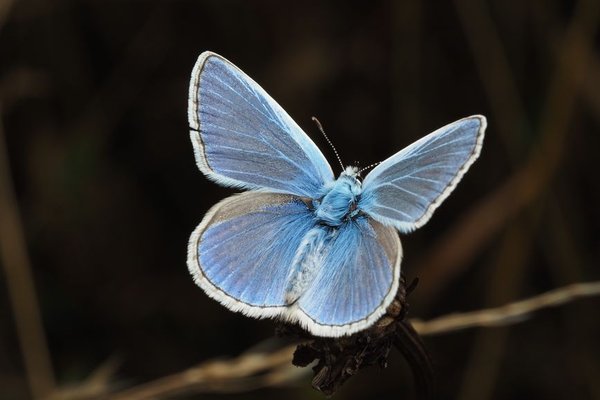
Male common blues have bright blue upperwings, while females are often browner and more variable. The undersides carry multiple orange and black spots, making a close view valuable. Holly blue is usually paler and cleaner-looking underneath, with small black spots rather than orange markings. It also tends to fly higher around shrubs, trees and gardens, whereas common blue is strongly associated with grassland and low-growing flowers.
Use butterfly seasons as a clue, not a rule
Flight time can narrow the options, but weather and location can shift appearances from year to year. Overwintering adults such as peacock, small tortoiseshell, comma and brimstone can appear early. Orange-tips are strongly linked with spring, while meadow browns and gatekeepers are typical sights of summer grassland. Red admirals may remain visible well into autumn. Treat the calendar as supporting evidence rather than the only identification feature.
A practical approach is to record three details before the butterfly flies away: approximate size, the most distinctive wing mark and the habitat. For example, a small orange-brown butterfly on a sunny hedge in midsummer with a double-pupilled eye-spot strongly suggests a gatekeeper. A similarly coloured insect with ragged wings and a pale comma underneath points instead to a comma. This simple three-clue habit is more reliable than trying to remember every species at once.
Build your identification skills
Photographs are useful even when imperfect. Try to capture the upperwing, underwing and surrounding vegetation, then compare several features rather than matching colour alone. Learning common species first makes rarer ones easier to recognise later.
Useful related guides include butterfly behaviour and basking, butterfly migration in Britain, and the butterfly life cycle from egg to adult.
Frequently asked questions
What is the easiest British butterfly to identify?
Peacock is among the easiest because its four large eye-spots are distinctive. Brimstone males, red admirals and commas also have very recognisable combinations of colour and wing shape.
How can I tell a gatekeeper from a meadow brown?
Check the eye-spot on the forewing. Gatekeepers normally show two small white pupils within the dark spot and have more orange across the wings. Meadow browns are generally larger and plainer, with a single white pupil in the main forewing eye-spot.
Which butterflies are commonly seen in British gardens?
Regular visitors include peacock, red admiral, small tortoiseshell, comma, large white, small white, holly blue and brimstone, although the mix varies by region, habitat and season.
When is the best time to look for butterflies in the UK?
Warm, calm and sunny conditions from spring to early autumn usually offer the best viewing, with the greatest variety often seen in summer. Some overwintering species can also emerge on mild days much earlier in the year.
Conclusion
Confident identification comes from combining wing shape, colour, habitat and season. Start with unmistakable species such as peacock, red admiral and brimstone, then move on to lookalike whites, browns and blues. After a few outings, butterfly markings that once seemed confusing become distinctive, turning a garden walk into a richer wildlife experience.