
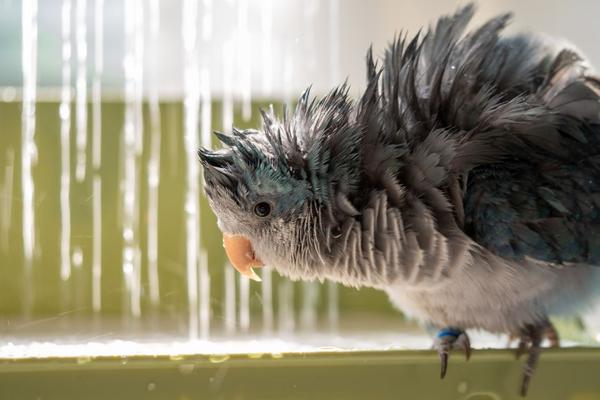
A bath can turn an ordinary morning into one of the liveliest parts of a pet bird’s day. Some birds splash enthusiastically in a shallow dish; others prefer a fine spray that feels like light rain. Neither approach is automatically better. Good pet bird bathing starts with clean water, a comfortable environment, and the freedom to say no.
Bathing helps birds manage dust and debris on their feathers and encourages preening, the careful grooming that keeps plumage in good condition. The trick is to make water a predictable opportunity rather than an event your bird must endure.
Let Your Bird Choose the Bathing Method
When learning how to bathe a bird, begin by observing what it already does around water. A bird that dips into its drinking bowl may enjoy a wider bathing dish. One that leans toward a light spray might prefer misting. Offer one option at a time so you can tell what feels comfortable.
A Shallow Water Dish
Place a stable, easy-to-clean dish on a secure surface. Add just enough fresh water for the bird to splash without needing to swim or stand in deep water. The bird should be able to step in and out easily. Supervise the session and remove the bath afterward so the water does not become contaminated with droppings or food.
Gentle Bird Misting
Fill a thoroughly clean, dedicated spray bottle with plain water. Use the finest mist setting and spray above or beside the bird, allowing droplets to fall softly rather than blasting its face. Start with a few sprays from a comfortable distance. If the bird lifts its wings, fluffs its feathers, or moves toward the mist, you may continue briefly.
Stop if it retreats, freezes, or appears frightened. Never hold a bird in place to mist it. A bottle previously used for cleaners or fragrances is unsuitable, even if rinsed.
Indirect Showers and Wet Leaves
Some parrots enjoy a secure shower perch positioned away from the direct shower stream. Gentle splashes are the goal, not water pressure. Keep the bird away from hot water, slippery surfaces, and open basins. Small birds may also investigate clean, wet, bird-safe leafy greens placed in a shallow tray. This can be an inviting first experience for a hesitant bather.
Make Temperature and Timing Part of the Routine
For bathing pet birds, use fresh, clean water that is around room temperature or mildly lukewarm. It should never feel hot. There is no single ideal numerical temperature for every species, so avoid extremes and watch your bird’s response. A chilly room, strong air-conditioning, or an open window makes bathing less comfortable.
Morning or early afternoon is usually best because feathers have time to dry before the cooler evening hours. Prepare a comfortably warm, draft-free place for your bird to rest and preen afterward. Avoid bathing immediately before bedtime.
Consider this simple routine for a cockatiel that dislikes spray bottles: put a shallow dish near its usual play area in the morning, step back, and leave it available for a short supervised period. Repeat on familiar days. If the bird only investigates the rim for a week, that still counts as progress; there is no need to rush.
How Often Should You Offer a Bath?
Many birds can be offered a bathing opportunity daily, but that does not mean they need a full soak every day. Start with one or two invitations per week and adjust to their preferences, species, household conditions, and veterinary advice. Some birds willingly bathe frequently; others choose to splash only occasionally.
Read the Bird, Not Just the Calendar
A relaxed bather may fan its tail, dip its head, raise its wings, shake out its feathers, or return for more droplets. These behaviors are more informative than assuming a species always likes a particular method. Some birds barely move while investigating water, so look at their overall posture and willingness to stay.
Signs to stop include repeated attempts to escape, frantic flapping, persistent freezing, open-mouth breathing, or obvious distress. End the session calmly and give the bird space. If breathing difficulty or weakness continues after the bath, seek prompt advice from an avian veterinarian.
For a nervous bird, begin without water: let it see the empty dish, reward voluntary curiosity, then introduce a tiny amount on another day. Consistent, gentle exposure works better than a dramatic first bath. Positive experiences also complement a broader pet bird enrichment routine built around choice and exploration.
Drying Safely After a Bath
Most healthy birds dry naturally by shaking, preening, and resting in a warm room without drafts. Give them a secure perch and plenty of time. Avoid directing fans or cold air toward damp feathers.
A household hair dryer is best avoided: heat can burn, airflow can frighten birds, and some appliances may contain materials that are unsafe when heated around birds. Toweling or rubbing feathers is also unnecessary for routine baths and may cause stress. If a bird becomes soaked, cold, or unusually subdued, contact an avian veterinarian for guidance.
Common Bathing Mistakes to Avoid
Plain water is enough for normal grooming. Never add human shampoo, soap, essential oils, perfume, or commercial bathing sprays unless an avian veterinarian specifically instructs you to use a product. Birds preen with their beaks and may swallow residue left on feathers.
Do not use deep sinks, filled bathtubs, strong shower jets, or unsupervised water containers. Wash the bathing dish after use, rinse it thoroughly, and keep drinking water separate and fresh. A consistent bird cage cleaning routine helps prevent contaminated water and damp surfaces from becoming hygiene problems.
Bathing is not a treatment for parasites, infections, sticky chemicals, or damaged plumage. If feathers are coated with an unfamiliar substance, ask a veterinarian what to do before attempting to wash it off.
Frequently Asked Questions
Can I bathe my bird every day?
You can generally offer a safe bathing opportunity every day, while allowing your bird to decide whether to participate. Frequent offerings do not mean daily forced soaking. Individual preferences and medical needs matter.
Should I use warm or cold water?
Use clean, room-temperature to mildly lukewarm water. Avoid hot or icy water, and ensure the room is comfortable and free of drafts while the bird dries.
What if my bird refuses to bathe?
Try a different gentle option, such as a shallow dish, indirect mist, or wet leafy greens. Introduce it slowly and never chase or restrain the bird. A veterinarian can help if poor feather condition or a sudden change in grooming accompanies refusal.
Can I use soap to clean dirty feathers?
Not for routine bathing. Soap and scented products can leave harmful residues that birds ingest while preening. Ask an avian veterinarian about unusual dirt, oil, or chemical contamination.
A Calm Routine Makes the Difference
The most reliable bathing routine is one your bird willingly repeats. Offer safe water, notice which approach it prefers, and allow time to dry comfortably. Pair this habit with regular feather checks and other everyday bird grooming essentials, and bath time can remain a low-pressure part of caring for healthy plumage.