
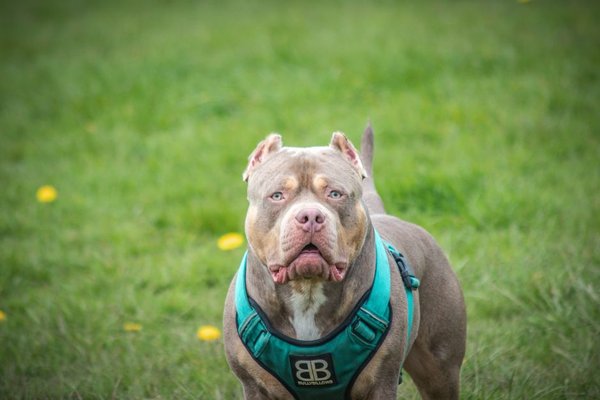
For owners looking for the XL Bully ban rules UK explained clearly, 2026 brings an important change. From 1 November 2026, a child under 12 must not be left in close contact with an XL Bully in a private place, such as a home or garden, without adult supervision. This adds a household safety duty to the rules already applying in public.
A Certificate of Exemption is not a registration that owners can file away and forget. It remains valid only while the holder follows its conditions for the dog’s lifetime. A breach can result in the dog losing exempt status, being seized and possible prosecution.
What the XL Bully ban means in 2026
XL Bully dogs are treated as a prohibited type under the Dangerous Dogs Act framework. It is generally illegal to own one without a valid Certificate of Exemption. Ordinary application windows have closed across the UK, although court-authorised exemptions may be possible in limited circumstances in some nations.
The core restrictions are broadly similar across England, Wales, Scotland and Northern Ireland. Owners must not breed from an XL Bully, sell it, give it away, exchange it, rehome it, abandon it or allow it to stray. Anyone who believes they have an unexempted XL Bully should contact the relevant police force or local council rather than trying to transfer the dog.
Although people often search for banned dog breeds UK as if one national checklist applies everywhere, administration differs. Defra manages exemptions in England and Wales, the Scottish Government runs the Scottish scheme, and local councils have key responsibilities in Northern Ireland. Owners should check the guidance for the nation where the dog is kept.
The new child-supervision rule from 1 November 2026
The newest XL Bully owner rules concern children in private settings. From 1 November 2026, an owner must not leave a child under 12 in close contact with an XL Bully without adult supervision. The rule covers homes, gardens and other private premises, not only public spaces.
Scotland’s guidance expressly states that a person aged 16 or over must be present whenever a child under 12 is with a prohibited dog. Guidance for England, Wales and Northern Ireland refers to adult supervision. Owners should monitor official updates before implementation, but a sensible approach is active, immediate supervision rather than having an adult elsewhere in the building.
The rule does not assume that every exempted dog will attack. It creates a legal safeguard because young children may miss warning signals, approach a resting dog or react unpredictably during play. Supervising young children around every dog breed remains good practice.
Current Certificate of Exemption duties
Keep the dog at the registered address
The dog must normally live at the certificate holder’s address. Temporary stays elsewhere are generally allowed for no more than 30 days in any 12-month period. A permanent address change must be reported, as must the dog’s death or export.
Use a lead and muzzle in public
An exempt XL Bully must be muzzled and kept on a lead in public places. The lead must be securely held by someone aged at least 16. A suitable muzzle should let the dog pant, breathe and drink, and reward-based muzzle training can help the dog wear it safely.
Prevent escape
The dog must be kept in secure conditions. Gates, fences, doors and outdoor areas should be checked regularly. Allowing an XL Bully to stray is an offence as well as a breach of the exemption conditions.
Maintain microchip and neutering compliance
The dog must be microchipped, and an authorised officer must be allowed to scan it when requested. Exempt XL Bullies must also be permanently neutered, with evidence submitted under the relevant national scheme. Most deadlines have passed. If evidence was not submitted, the exemption may be invalid and the owner should contact the police, council or issuing authority promptly.
Produce the certificate when requested
Police or an authorised local authority officer can request access to the microchip and a copy of the Certificate of Exemption. The certificate normally has to be supplied within five days. Keeping a secure digital copy alongside the original can help owners respond quickly.
Keep Northern Ireland licensing current
Northern Ireland also requires an annual dog licence. An XL Bully must remain licensed for its exemption to stay valid, so owners should renew through their local council and keep the details consistent.
Third-party insurance is no longer compulsory
Another major 2026 change is the removal of mandatory third-party public liability insurance for exempted banned dogs. The requirement ended from 1 July 2026 after specialist cover was withdrawn. Owners had to maintain cover through 30 June 2026, but it is no longer an exemption condition.
This does not remove responsibility for damage or injury caused by the dog. Voluntary cover may still be useful where a suitable policy is available, although owners should read exclusions carefully.
A certificate does not override wider dog-control law
A certificate of exemption dog record allows an owner to keep a prohibited type only while every condition is followed. It does not permit breeding, sale, transfer or unsafe handling, and it does not protect an owner if the dog is dangerously out of control.
The Dangerous Dogs Act rules on dangerously out-of-control dogs apply to all breeds and can apply in public or private places, including the owner’s home. Enforcement can therefore follow from a dog’s behaviour even when its exemption paperwork is otherwise in order.
Frequently asked questions
Can I apply for a new XL Bully Certificate of Exemption in 2026?
The ordinary application windows have closed. In some parts of the UK, a new exemption may only be authorised by a court. If you have an XL Bully without valid paperwork, contact the police or local council.
Can an exempt XL Bully live with children?
Yes, but from 1 November 2026 a child under 12 must not be left in close contact with the dog in a private place without the required supervision.
Can I give my exempt XL Bully to a family member?
No. Selling, gifting, exchanging, rehoming or otherwise transferring ownership of an XL Bully is prohibited. The exemption cannot be passed to a new keeper.
Does my XL Bully still need insurance?
Compulsory third-party liability insurance stopped being an exemption condition from 1 July 2026. Owners remain legally responsible for their dogs and may choose voluntary cover if available.
Staying compliant as the rules change
The practical message for 2026 is clear: keep certificate details accurate, maintain secure housing, use a lead and muzzle in public, preserve microchip and neutering compliance, and prepare for the under-12 supervision condition beginning on 1 November. Because administration varies across the UK, owners should rely on the latest official guidance for England and Wales, Scotland or Northern Ireland whenever their circumstances change.