
Dogs rarely communicate with one isolated gesture. A wagging tail, pinned ears or a quick lip lick can mean different things depending on what the rest of the body is doing, what happened just before it, and whether the dog can move away. The most useful way to understand dog body language is to read clusters of signals rather than treating any single movement as a fixed translation.
That matters for everyday safety and trust. A dog that looks “quiet” may actually be worried, while a dog that growls may be giving valuable warning. Learning your dog’s normal posture, movement and expressions gives you a baseline, making meaningful changes easier to spot.
Start With the Whole Dog, Not One Body Part
Before deciding what a signal means, look from nose to tail. Is the body loose or stiff? Is the dog moving toward something, leaning away, freezing, crouching or trying to leave? Are the eyes soft or wide? Is the mouth relaxed or tightly closed? Then add the environment. A yawn after waking is ordinary; a yawn during an unwanted hug or noisy veterinary visit may be stress-related.
This whole-picture approach prevents common mistakes. A dog can wag while excited, uncertain, frustrated or highly aroused, so a wag alone does not prove friendliness. Raised hackles also show heightened arousal, which may occur with fear, excitement or conflict; they do not automatically mean aggression.
Posture and Movement Reveal Comfort or Concern
Loose movement often suggests comfort
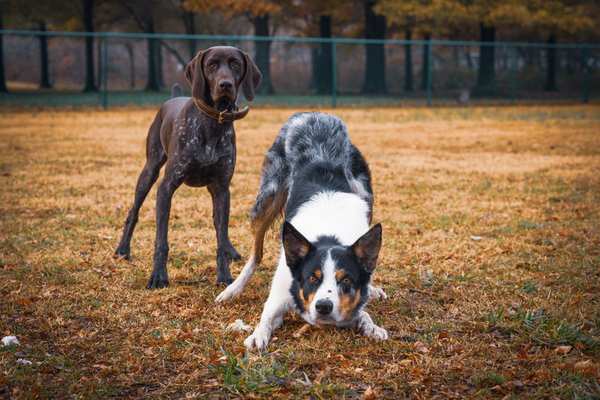
A relaxed dog usually looks physically soft. Weight is balanced, muscles are not rigid, and movement appears easy rather than sudden or frozen. The face may be relaxed, the eyes soft, and the ears and tail held in a position that is normal for that individual. Some dogs invite play with a play bow, lowering the front of the body while keeping the rear raised.
Leaning away, crouching or freezing deserves attention
Dogs that feel uneasy may turn their head away, shift weight backwards, lower their body, tuck the tail, hide or attempt to create distance. Freezing is especially important because a suddenly still dog may be communicating that the situation has become difficult. Giving the dog space is safer than moving closer to test the reaction.
Many dog stress signals are subtle. Lip licking when no food is present, yawning when the dog is not tired, blinking, looking away, lifting a paw, panting without heat or exercise, pacing and refusing treats can all occur when a dog is uncomfortable. Interpret them in context rather than in isolation.
Dog Tail Meaning Depends on More Than the Wag
There is no single dog tail meaning that applies to every wag. A loose, sweeping wag paired with a soft body can be consistent with positive arousal. A lowered or tucked tail may accompany fear or uncertainty. A high, stiff tail with a rigid body can signal intense alertness or arousal.
Breed, anatomy and individual variation matter too. Some dogs naturally carry their tails high, low or curled, while dogs with very short tails provide fewer visible cues. Compare tail position with that dog’s normal carriage rather than relying on a universal rule.
Dog Ear Positions, Eyes and Mouth
Dog ear positions can add useful information, but ear shape varies dramatically between breeds. Ears held naturally with a soft face are generally less concerning than ears pulled tightly back alongside a tense face and leaning-away posture. Forward ears may show attention, but attention can be curious, excited or tense.
Soft, normally shaped eyes often appear in relaxed dogs. Wide eyes, enlarged pupils or visible whites can accompany stress or fear. A hard, sustained stare paired with stiffness can be a warning sign. The mouth may change too: a stressed dog may suddenly close it, lick the lips or pant, while bared teeth, growling, snapping and lunging are more obvious warnings that distance is needed.
What People Call Dog Calming Signals
The phrase dog calming signals is often used for behaviours such as turning away, lip licking, yawning, sniffing the ground or moving in a curve. It is safer to think of these as possible de-escalation, avoidance, displacement or stress-related behaviours rather than assuming every example has one fixed purpose.
Context is the deciding factor. If your dog repeatedly looks away, licks their lips and leans back while a visitor reaches over their head, treat the cluster as a request for less pressure. Ask the visitor to stop reaching, turn slightly sideways and let the dog choose whether to approach.
A Real-World Example: Read Signals in Sequence
Imagine a dog resting on a bed when a child approaches for a cuddle. The dog turns their head away, licks their lips, closes their mouth and becomes still. Their ears move back and the whites of the eyes become visible. None of those signs alone predicts a bite, but together they show rising discomfort. Calmly call the child away and give the dog undisturbed space.
This is why early signals matter. Dogs may escalate to growling, snapping or biting when subtler communication has not created enough distance. Do not punish a growl; instead, change the situation and seek qualified behavioural help if the pattern is frequent, intense or difficult to manage.
Know What Is Normal for Your Dog
Watch how your dog looks when resting at home, greeting familiar people, playing and exploring. Short videos can help because quick tongue flicks, freezes and head turns are easy to miss in real time. A sudden behaviour change also deserves medical attention, since pain or illness can alter tolerance and behaviour. If a usually sociable dog becomes withdrawn, irritable or reluctant to be touched, speak with a veterinarian.
FAQ
Does a wagging tail always mean a dog is happy?
No. Tail wagging shows arousal and communication, but the emotion behind it can vary. Read the tail together with posture, facial expression and context.
What are common dog stress signals?
They can include lip licking, yawning when not tired, turning away, tense muscles, pinned-back ears, a lowered or tucked tail, panting without heat or exercise, pacing, freezing, hiding and refusing food.
Why does my dog show the whites of their eyes?
Visible eye whites can occur when a dog turns the head while keeping their eyes on something, and may be associated with stress or concern. Look for other signs such as stiffness, leaning away or pinned ears.
Should I approach a dog that looks frightened?
Usually, reduce pressure and allow distance. Avoid looming, reaching toward the dog or forcing interaction. If fear is persistent or there is a risk of biting, consult a veterinarian and an appropriately qualified behaviour professional.
Read the Pattern, Then Respond
Dog body language explained well is less about memorising a dictionary of gestures and more about noticing patterns. Watch the whole body, compare what you see with the dog’s normal behaviour, consider the environment and pay attention to change over time. When several signals point toward discomfort, respond early by reducing pressure and increasing distance. That habit makes interactions clearer, safer and more respectful for both dogs and people.