
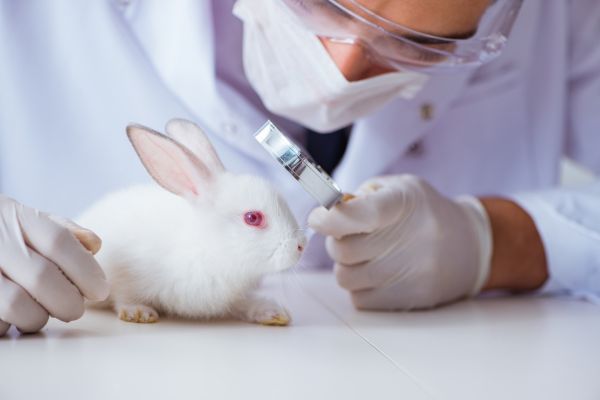
Animal testing sits at one of the most uncomfortable intersections of science, medicine, and morality. For decades, animals have been used to study diseases, evaluate chemicals, test medicines, and understand how living organisms respond to new treatments. Supporters argue that this research has contributed to important medical advances. Critics respond that causing pain, fear, or death to animals cannot be justified, especially when newer research methods are becoming available.
The debate is not as simple as choosing between scientific progress and animal welfare. It raises harder questions. How reliable are animal experiments? When, if ever, is their use acceptable? Are researchers doing enough to reduce suffering? And can modern alternatives eventually replace animals altogether?
Understanding animal testing requires looking beyond slogans and examining what happens inside laboratories, why the practice continues, and how scientific research is changing.
What Animal Testing Involves
Animal testing refers to the use of non-human animals in scientific experiments. These studies may involve observing behavior, testing the effects of a drug, studying disease development, evaluating the safety of chemicals, or examining biological processes.
Mice and rats are among the most commonly used laboratory animals because they reproduce quickly, are relatively easy to house, and share many biological characteristics with humans. Rabbits, fish, birds, guinea pigs, dogs, cats, and non-human primates may also be used, depending on the purpose of the study.
The level of harm varies widely. Some animals may be observed with minimal interference, while others may undergo surgery, exposure to toxic substances, genetic modification, repeated procedures, or deliberate infection. In some experiments, animals are euthanized so that researchers can examine their organs or tissues.
This range matters because public discussions sometimes treat all animal research as identical. A behavioral observation study is very different from a toxicity experiment. Still, even low-harm research raises ethical concerns when animals are confined, handled, bred specifically for experimentation, or prevented from living naturally.
Why Scientists Still Use Animals
One reason animal testing continues is that the human body is extraordinarily complex. A new medicine may affect the heart, liver, brain, hormones, immune system, and metabolism at the same time. Researchers cannot always predict these interactions by studying isolated cells.
Animals provide a whole living system in which scientists can observe how a substance moves through the body, whether it produces unexpected side effects, and how different organs respond. In some cases, animal studies are also required before a treatment can be tested in humans.
Historically, animal research has played a role in the development of vaccines, surgical techniques, antibiotics, cancer treatments, and medicines for chronic diseases. This history is often presented as the strongest defense of the practice.
However, past usefulness does not automatically justify every current experiment. Scientific methods improve. Ethical standards evolve. A practice that was once considered necessary may become less acceptable when safer or more accurate alternatives emerge.
The Central Ethical Conflict
The ethical debate begins with a basic fact: animals can experience pain, distress, fear, and discomfort. Many species also form social relationships, show preferences, avoid danger, and respond emotionally to their surroundings.
Those who oppose animal testing argue that sentient beings should not be treated merely as research tools. From this perspective, the benefits to humans do not erase the suffering imposed on animals. The fact that animals cannot consent makes the issue even more troubling.
Supporters of carefully regulated research take a different position. They argue that limited animal use may be morally defensible when the expected benefit is substantial, the research cannot be conducted another way, and suffering is minimized as much as possible.
The difficulty lies in deciding what counts as a substantial benefit. A study aimed at treating a deadly disease may appear easier to defend than an experiment involving a minor consumer product. Yet even medical research may fail, duplicate earlier work, or produce results that do not apply to humans.
Ethical review therefore depends not only on the purpose of an experiment but also on its quality. Poorly designed science cannot justify animal suffering because it is unlikely to produce meaningful knowledge.
The Problem of Scientific Reliability
Animal testing is often described as a necessary step before human trials, but animals are not miniature humans. Differences in genetics, metabolism, immune responses, lifespan, and organ function can significantly affect research results.
A treatment that appears safe in one species may be harmful in humans. The reverse can also happen: a substance that causes problems in animals may not produce the same effect in people. Even results from one animal species may differ from results in another.
Laboratory conditions can create further complications. Animals may experience stress from confinement, noise, handling, isolation, artificial lighting, or unfamiliar environments. Stress can alter hormones, immune responses, behavior, and disease development, potentially affecting the results.
This does not mean all animal research is scientifically useless. It means the findings must be interpreted carefully. Animal models can provide clues, but they cannot perfectly predict human biology.
Concerns about reliability have encouraged researchers to improve study design, reduce unnecessary duplication, report negative results, and develop methods based more directly on human cells and tissues.
The Three Rs of Responsible Research
A widely accepted framework for improving animal research is known as the Three Rs: replacement, reduction, and refinement.
Replacement means using non-animal methods whenever possible. Reduction means using fewer animals while still collecting scientifically valid data. Refinement means changing procedures to reduce pain, distress, and lasting harm.
Although the principles sound straightforward, applying them consistently can be difficult. Researchers may disagree about whether an alternative method is reliable enough. Institutions may lack funding or equipment for advanced technologies. Some scientists may also continue using familiar animal models because established methods are easier to publish, compare, or approve.
The Three Rs are valuable, but critics argue that they sometimes focus on making animal testing less harmful rather than questioning whether it should happen at all. In practice, their effectiveness depends on strict oversight, transparent reporting, and genuine commitment from researchers and institutions.
Promising Alternatives to Animal Testing
Scientific alternatives have developed rapidly. Cell cultures allow researchers to study human cells in controlled laboratory conditions. These models can be used to investigate disease mechanisms, screen medicines, and test whether a substance damages specific tissues.
Organoids are another important development. These are small, three-dimensional structures grown from human cells that imitate some features of organs such as the brain, liver, lungs, or intestines. They are not complete organs, but they can provide more realistic information than flat cell cultures.
Organ-on-a-chip technology goes a step further by placing living human cells inside small devices that recreate aspects of blood flow, pressure, movement, and tissue interaction. Researchers can use these systems to study how drugs affect organs and how multiple tissues communicate.
Computer modeling and artificial intelligence are also being used to predict toxicity, identify promising drug candidates, and analyze biological data. Researchers can sometimes estimate how a chemical will behave by comparing it with large databases of known substances.
Human tissue donated during surgery or after death can offer valuable insights as well. Carefully designed clinical studies, advanced medical imaging, and microdosing experiments may help researchers gather human-specific information without relying as heavily on animals.
No single alternative can yet answer every scientific question. Together, however, these methods are steadily reducing the assumption that animal testing is always the best or only option.
Animal Testing Beyond Medical Research
Public opinion often distinguishes between medical research and product testing. Many people who accept limited animal use for serious diseases strongly oppose testing for cosmetics, household products, or non-essential chemicals.
Cosmetic animal testing has become a major symbol of the wider debate because the perceived human benefit is relatively small compared with the potential suffering involved. This has encouraged some governments and companies to restrict or eliminate the practice.
However, product supply chains can be complicated. Ingredients may have been tested in the past, required by certain regulations, or used across several industries. Labels and ethical claims do not always explain the full history of a product.
The issue therefore extends beyond individual buying choices. It also involves regulatory systems, international standards, scientific investment, and the availability of accepted non-animal testing methods.
The Human Cost of Slow Change
Replacing animal testing is sometimes presented mainly as an animal welfare goal, but it may also benefit human health. More human-relevant research models could improve predictions, reduce failed drug development, and identify harmful effects earlier.
At the same time, moving too quickly without validated alternatives could create risks. A new method must be tested carefully before regulators and scientists can rely on it. The challenge is to avoid using caution as an excuse for permanent delay.
Meaningful progress requires investment. Laboratories need training, equipment, shared databases, and clear regulatory pathways for approving non-animal methods. Researchers also need incentives to develop and publish alternatives rather than simply repeating established animal experiments.
Transparency is equally important. The public should be able to understand why animals are being used, how many are involved, what level of harm is expected, and whether alternative methods were seriously considered.
A More Thoughtful Path Forward
Animal testing cannot be discussed honestly through absolute claims alone. It has contributed to scientific knowledge, but it also causes real suffering. It can provide useful information, yet its ability to predict human outcomes is limited. Alternatives are increasingly promising, though they are not yet capable of replacing every type of experiment.
The most responsible path is neither blind acceptance nor careless dismissal. It is a steady movement toward research that is more humane, transparent, scientifically rigorous, and directly relevant to people.
Every experiment involving animals should face a demanding question: is this truly necessary, and is there a better way? As technology advances, the answer will increasingly be yes—there is a better way. The goal should be to reach that future as carefully, quickly, and honestly as possible.