
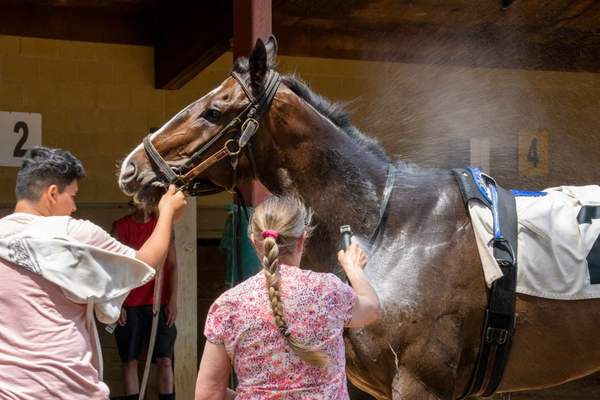
A bath can turn a dusty horse into a show-ring picture, but appearance is only part of the job. Knowing how to wash a horse safely means choosing the right day, keeping the horse calm, rinsing every trace of shampoo and leaving enough time to dry. Sometimes a quick rinse or targeted sponge wash is better than a full bath.
Does Your Horse Actually Need a Bath?
Routine brushing lifts dried mud, loose hair and dust without soaking the skin. A regular daily horse grooming routine is usually enough between baths. Use shampoo when grime persists, before an event or when appropriate for a particular care need. Excessive washing with detergent can remove protective oils and aggravate sensitive skin.
Choose a mild day with a sheltered place to dry. Avoid bathing in cold wind or rain unless you can keep the horse comfortable afterward. Check for cuts, scabs, hair loss or irritated skin first. Ask your vet about suspicious skin changes before scrubbing or using medicated washes.
Prepare Your Washing Area and Equipment
Choose a non-slip surface with good drainage and enough room to move safely. Have someone hold the horse if necessary, particularly during early baths. Keep the hose out of the horse’s feet, and never leave a tied horse unattended.
Gather a soft brush, separate face sponge, buckets, towels, sweat scraper and mild horse shampoo. Follow the shampoo label for dilution; household detergents are not a suitable substitute. For an ordinary bath, water that feels comfortably lukewarm to your hand is a practical choice. Avoid uncomfortable extremes.
How to Wash a Horse Step by Step
Brush Away Loose Dirt First
Pick out the hooves and brush away dry dirt before wetting the coat. Otherwise, sand and mud can become gritty paste beneath your sponge. If the horse dislikes water, introduce a damp sponge first, rewarding calm behaviour rather than forcing the process.
Wet the Legs and Work Upward
Begin with a gentle flow at the lower legs, then gradually wet the shoulders, neck, body and hindquarters. Keep hose pressure low. Watch for signs of tension, stepping away or pinned ears; pause if needed. Never direct the spray into the eyes, ears or nostrils.
Use Shampoo Sparingly
Apply diluted horse shampoo with a sponge or according to its label. Massage gently in sections, paying attention to sweat-prone areas under the saddle and along the neck. Do not scrub hard over bony points. Separate mane and tail tangles with your fingers before cleaning those areas.
Clean the Face With a Sponge
Use a damp, clean cloth or sponge around the forehead, muzzle and cheeks. Keep soap away from the eyes and do not let water enter the ears. Work from beside the horse, not directly in front, and take extra time with a head-shy animal.
Rinse Thoroughly
Rinse from the upper body downward, section by section. Run your fingers through thick hair to check for hidden suds. Leftover shampoo may irritate the skin or leave a dull, sticky coat. Thorough rinsing is one of the most important parts of washing a horse coat.
Drying a Horse Safely
Use a clean sweat scraper gently over broad muscular areas to remove excess water, then towel the face and legs. Take particular care around the pasterns, where lingering moisture can contribute to skin problems. Avoid scraping over sharp bony areas or sensitive skin.
Allow the horse to dry in a sheltered, ventilated area. Gentle walking may help on a mild day, provided the horse is comfortable. Do not put a normal turnout rug over a soaking coat or send the horse into chilly wind. In cooler weather, a suitable breathable cooler can help wick moisture; check it and change it when damp.
Adjust Your Approach for the Season
After Exercise in Hot Weather
Cooling an overheated horse is different from a cosmetic shampoo bath. Apply plenty of cool water promptly, provide shade and allow access to drinking water. Do not delay cooling to find lukewarm water. If the horse is distressed, unsteady or breathing abnormally, contact a veterinarian immediately while cooling continues.
In Winter
Thick winter hair dries slowly, and wet hair insulates less effectively. If conditions are cold or windy, remove dry mud with grooming tools or sponge only the dirty patches. A guide to winter horse coat care can help you plan for changing weather. Allow extra drying time for older or clipped horses.
Before a Show or Competition
Consider bathing the afternoon before an early show rather than immediately before loading. For example, wash and rinse a grey horse the previous day, allow it to dry, then spot-clean any bedding stains in the morning. This avoids soaking the whole coat twice. Clean bedding and careful mane and tail grooming also help preserve the result.
Bathing Mistakes Worth Avoiding
Common problems include using concentrated shampoo, blasting a nervous horse with the hose, leaving suds in a thick coat and starting so late that drying becomes difficult. Keep grooming equipment clean between horses, especially when skin disease is suspected. Stop using a product if irritation appears, and seek veterinary advice if symptoms persist.
A bath is also an opportunity to notice rub marks, swellings and skin changes. Pair washing with routine hoof checks and sensible coat care. A gleaming coat is pleasant, but comfort and health matter more than a spotless finish.
Frequently Asked Questions
How often should you bathe a horse?
There is no fixed schedule. Many horses do well with regular brushing, occasional water rinses and a full shampoo bath only when needed. Consider the season, workload and skin condition.
Can you use human shampoo on a horse?
A mild product made for horses is preferable. Human shampoos can contain fragrances or cleansers that do not suit equine skin. Follow the label and discontinue use if a reaction occurs.
Is it safe to hose a horse’s face?
Use a damp sponge or cloth instead for better control. Avoid directing water toward the eyes, inside the ears or into the nostrils.
How long does drying a horse take?
It depends on coat thickness, temperature, humidity and airflow. A short summer coat may dry relatively quickly; a dense winter coat can remain damp for hours. Check near the skin rather than judging by the outer hair alone.
Keep the Bath Comfortable
The safest way to bathe a horse is not necessarily the most elaborate. Choose a suitable day, prepare your supplies, introduce water gradually, use gentle shampoo, rinse thoroughly and plan for drying. With a calm approach, bathing becomes a useful part of coat care rather than a stressful event.