
Britain’s seas are far more than a passageway for migrating whales. From the food-rich waters around the Hebrides to the deep Atlantic slopes west of the continental shelf, different species find places to feed, travel and occasionally rest. Some can be spotted from a coastal headland; others spend most of their lives well beyond sight of land.
For anyone curious about whales in UK waters, the key is understanding that there is no single British whale season or location. Species, prey, water depth and weather all influence what might appear. Learning those patterns makes British whale sightings more rewarding, even when the sea remains quiet.
Which whale species live in UK waters?
More than two dozen species of whales, dolphins and porpoises have been recorded around Britain, although published totals vary with the area and records considered. These animals are collectively called cetaceans. Only some are the large whales people imagine when they hear the word. The most familiar UK whale species range from relatively small minke whales to enormous fin whales.
Minke whales: the regular coastal visitors
The common minke whale is the baleen whale most often seen near the UK coast. Particularly during spring and summer, minkes feed around western Scotland and parts of the North Sea. They are slim, dark-backed animals with a pointed snout and a small, curved dorsal fin. A pale band on each pectoral flipper can help with identification when visible.
Minkes eat small schooling fish, including herring and sandeels. Around the Hebrides, a surfacing whale may be accompanied by diving seabirds attracted to the same concentration of prey. Readers wanting to identify that silhouette more confidently can explore a dedicated minke whale identification guide.
Humpback whales: distinctive and increasingly familiar sightings
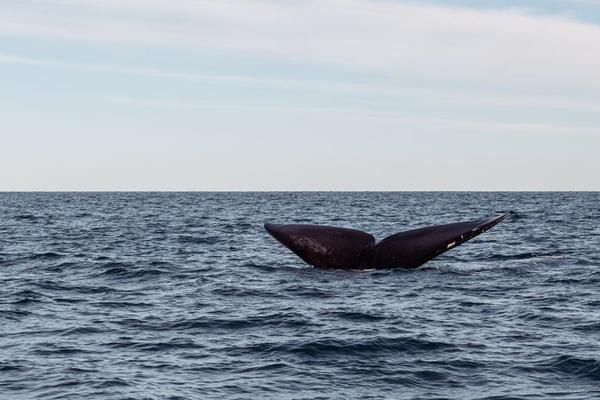
Humpbacks are recorded around Scotland and elsewhere in British waters, including the North Sea and parts of the Irish Sea. Their long white-marked flippers, knobbly head and habit of lifting the tail before a deep dive make them memorable. They feed on schooling fish and krill, but their presence is not predictable at any particular beach.
Fin whales: giants of deeper water
Fin whales, the world’s second-largest whale species, occur in deeper offshore waters west of Britain and occasionally closer to the coast. Their long bodies and tall blows can be striking at sea. Many encounters happen offshore, so a coastal sighting is an exception rather than something visitors should expect.
Orcas: technically members of the dolphin family
Orcas, or killer whales, are the largest dolphins, yet they are often included in discussions of whales around Britain. They occur around Orkney, Shetland and northern Scotland, with some encounters elsewhere. Different groups have different movements and diets; some hunt fish while others take marine mammals. An orca behaviour guide can explain these differences. A sighting near the Northern Isles is possible, never guaranteed.
Sperm whales and less familiar offshore species
Sperm whales are deep-diving toothed whales associated with offshore waters, where they hunt squid and other prey. Long-finned pilot whales, members of the dolphin family despite their name, also use deeper waters. Sei whales and several beaked whale species are recorded more occasionally. A rare visitor appearing on a sightings map does not mean it regularly inhabits nearby coastal shallows.
Where are whales most likely to be found around Britain?
West coast of Scotland and the Hebrides
The waters around Mull, Coll, Tiree, the Small Isles and the Outer Hebrides are particularly important for minke whale observations. Tidal currents, seabed features and concentrated food help create feeding opportunities. Research in the Hebrides has found high summer minke sighting rates in the northern Minch, northern Sea of the Hebrides and south of Mull.
Orkney, Shetland and the far north
The Northern Isles are well known for orca sightings, particularly during periods when visiting groups pass through. Minke whales also occur in surrounding seas. Headlands with wide views can be useful observation points, though strong tides and exposed weather demand care on land and at sea.
North Sea, Wales and southwest England
Minke whales are recorded in the North Sea, while humpbacks sometimes appear along Britain’s eastern coastline. Western waters, including those off Wales and southwest England, can produce whale reports too, although encounters vary greatly. The absence of a dramatic recent sighting does not mean a coastline lacks cetaceans: harbour porpoises and dolphins are often more frequently observed.
Why whales appear at different times of year
Seasonal movement is closely tied to feeding opportunities, but not every species follows a simple north-in-summer, south-in-winter timetable. In the Hebrides, minkes are most conspicuous during the warmer months, with occasional winter records. Some humpback reports occur in colder months. Changes in fish distribution, sea conditions and how often people watch the water also affect reported sightings.
How to improve your chances of spotting a whale
Choose a calm day with good visibility, preferably when the sea surface is not broken by whitecaps. Watch slowly across a broad area rather than scanning only for an enormous tail. A brief vertical blow, a dark back rolling at the surface or repeated seabird dives may offer the first clue.
For a practical Hebridean example, try watching from a safe public viewpoint around Mull during the warmer months. Bring binoculars, note the direction of the light and give the sea at least half an hour of patient attention. Check recent records from Sea Watch Foundation or Hebridean Whale and Dolphin Trust, but treat them as clues, not promises.
Stay well back from cliff edges. If observing from a boat, choose a responsible operator that avoids chasing, crowding or cutting across a whale’s path. Keep noise and disturbance low. Photographs, location, time and a careful description can make a useful contribution to citizen-science sightings databases. A responsible whale-watching guide offers more advice.
Frequently asked questions
What is the most common whale in UK waters?
The common minke whale is the baleen whale most regularly sighted near the British coast. Harbour porpoises and several dolphin species are often seen more frequently, but they belong to different everyday categories within the cetacean group.
Can you see whales from land in Britain?
Yes. Coastal sightings are possible, particularly from suitable Scottish headlands, but distance, weather and luck make a difference. Offshore whale species are much less likely to be seen from shore.
What is the best month to see whales in Scotland?
There is no guaranteed month. Late spring through summer is a useful period for seeking minke whales around the Hebrides, while orca encounters in northern Scotland follow different patterns. Local sighting records can help guide a visit.
Are blue whales found in UK waters?
Blue whales have been recorded exceptionally in the wider seas around Britain, but they are not a regular coastal sighting. Anyone hoping to see a large whale near shore has more realistic expectations with minke whales.
A living marine landscape
The story of whales around Britain is really a story of connected habitats: coastal feeding grounds, productive shelf waters and the deep Atlantic beyond. Recognising which species use each setting makes a brief blow on the horizon more meaningful. It also shows why protecting healthy seas matters long after a whale has disappeared beneath the surface.