
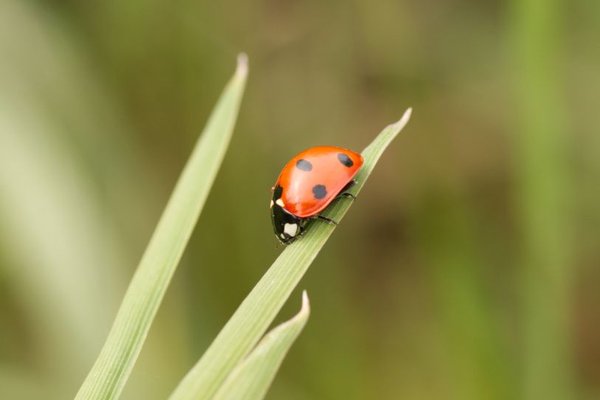
A red beetle with black spots is easy to call a ladybird. Naming its species is more interesting. Across the UK, ladybirds appear in red, yellow, orange, brown and black, and some have pale spots rather than dark ones. Gardens, hedgerows, woodland and even conifer branches support different kinds. Learning to recognise a few combinations of markings and habitats makes everyday sightings much easier to identify.
Ladybirds belong to the beetle family Coccinellidae. Britain has more than 40 resident species, although many tiny, dark members look nothing like the familiar spotted garden visitors. The species below are useful starting points for UK ladybird identification.
How to identify a British ladybird
Start with the whole insect, not just its spots. Estimate its length, photograph the back and head area, and notice which plant it occupies. Most familiar ladybirds have rounded, hardened wing cases called elytra, with delicate flying wings folded underneath. Their shape is one clue connecting them to broader beetle biology.
Look at four features together: the background colour; whether markings are round, square or ringed; the approximate body size; and the surroundings. Count spots only after checking those features. Some species have several colour forms, and marks may merge or differ slightly between individuals. A useful beetle anatomy guide can explain why the wing cases and the shield behind the head matter.
Common ladybird species in the UK
Seven-spot ladybird
The classic British ladybird is bright red with seven black spots: three on each wing case and one shared near the front. Usually around 5–8 mm long, it appears in gardens, meadows and hedgerows. Adults and larvae feed heavily on aphids. A clean seven-spot pattern is one of the most dependable identifications.
Two-spot ladybird
At roughly 4–5 mm, this ladybird is smaller and surprisingly variable. The usual red form has one black spot on each wing case, but some are predominantly black with red marks. Look on deciduous trees, shrubs and garden plants, especially where aphids gather. Colour alone cannot rule this species in or out.
Ten-spot ladybird
Despite its name, the ten-spot does not always show ten separate spots. It can be pale orange, reddish or dark, with variable markings. This small native species is associated with broadleaved trees and hedgerows. When a tiny ladybird seems to fit no familiar spot count, consider this species rather than assuming it is a harlequin.
Fourteen-spot ladybird
Often yellow with black, angular patches, the fourteen-spot can resemble a miniature chequerboard. Its markings may join together rather than forming fourteen neat dots. It is commonly found among grasses, hedges and garden vegetation, where it hunts aphids. Squarish markings are a better starting clue than counting them.
Twenty-two-spot ladybird
This tiny, bright lemon-yellow species usually has 22 small black spots, although fewer may be visible. At about 3–4 mm, it is easily overlooked on leaves in gardens and grassy places. Unlike the aphid-hunting seven-spot, it eats powdery mildew fungi. A yellow ladybird on a mildew-covered leaf therefore offers a particularly useful habitat clue.
Orange ladybird
Orange ladybirds have orange wing cases decorated with pale cream or white spots, often 12–16. They spend much of their time on broadleaved trees, including sycamores, feeding on mildew. Spot colour separates them quickly from yellow species with black markings. Check foliage overhead as well as flowers near ground level.
Cream-spot ladybird
The cream-spot is typically chestnut-brown with 14 pale spots. It favours deciduous trees and feeds on aphids and psyllids, small sap-sucking insects. Its darker, glossy background makes the cream marks distinctive. Woodland edges and mature garden trees are promising places to search for it.
Eyed ladybird
One of Britain’s largest native ladybirds, the eyed ladybird can reach around 8–10 mm. Its black spots are often surrounded by pale rings, giving the appearance of little eyes. It is especially associated with pine trees, where it hunts aphids. Those pale rings and the conifer setting are more informative than an exact spot total.
Harlequin ladybird
First established in Britain in 2004, the introduced harlequin is now widespread. It may be orange or red with many black spots, or black with red patches. Adults are generally larger than small native two-spots, and the pale shield behind the head often bears an M-shaped dark mark. Harlequins gather around buildings in autumn and may compete with native ladybirds. Avoid trying to remove suspected harlequins outdoors: several native species look similar.
Where to look: habitat is part of the identification
Different ladybird habitats reflect different foods. Aphid predators patrol roses, nettles, hedges and trees; mildew feeders search affected leaves; and pine-associated species often remain above eye level. A black-and-red insect on a tree trunk could be a kidney-spot ladybird, which preys on scale insects, rather than a two-spot.
For a practical garden check, inspect the underside of an aphid-covered rose leaf, then compare it with a powdery sycamore leaf and nearby pine branches. Record the plant, a rough size and a clear photograph before consulting an identification guide. An aphid identification guide can help explain why particular ladybirds favour certain plants.
Ladybird larvae and seasonal changes
A young ladybird rarely resembles a miniature adult. Larvae are elongated, often grey or black with orange patches or spines. They develop through several stages, become attached pupae and emerge as winged beetles. A guide to the insect life cycle is useful when the strange spiky creature on your plant turns out to be a ladybird larva.
Adults are most noticeable in warmer months, while many spend winter tucked beneath bark, among leaf litter or in sheltered buildings. The place and season of a sighting provide context, but neither proves the species without its physical features.
Frequently asked questions
How many ladybird species are found in the UK?
More than 40 species are considered resident in Britain. Many are small, inconspicuous beetles, so the colourful garden species represent only part of the family.
Does the number of spots tell you a ladybird’s age?
No. Spots are not a measure of age. Ladybird markings relate to species and colour form, and the pattern is present when the adult emerges.
Are all yellow ladybirds twenty-two-spots?
No. The fourteen-spot is often yellow too, but usually has irregular black patches rather than neat round dots. Check size and marking shape.
Are harlequin ladybirds dangerous to people?
They are not generally dangerous, although they can occasionally nip or release an unpleasant-smelling defensive fluid. Their greater ecological concern is competition with native species.
Conclusion
British ladybirds are far more varied than the familiar red seven-spot suggests. The easiest reliable identifications combine size, colour, spot shape and the plant or habitat where the beetle was found. Keep those details with a photograph, and even an uncertain sighting becomes a useful opportunity to understand the wildlife living alongside us.